
Basketball
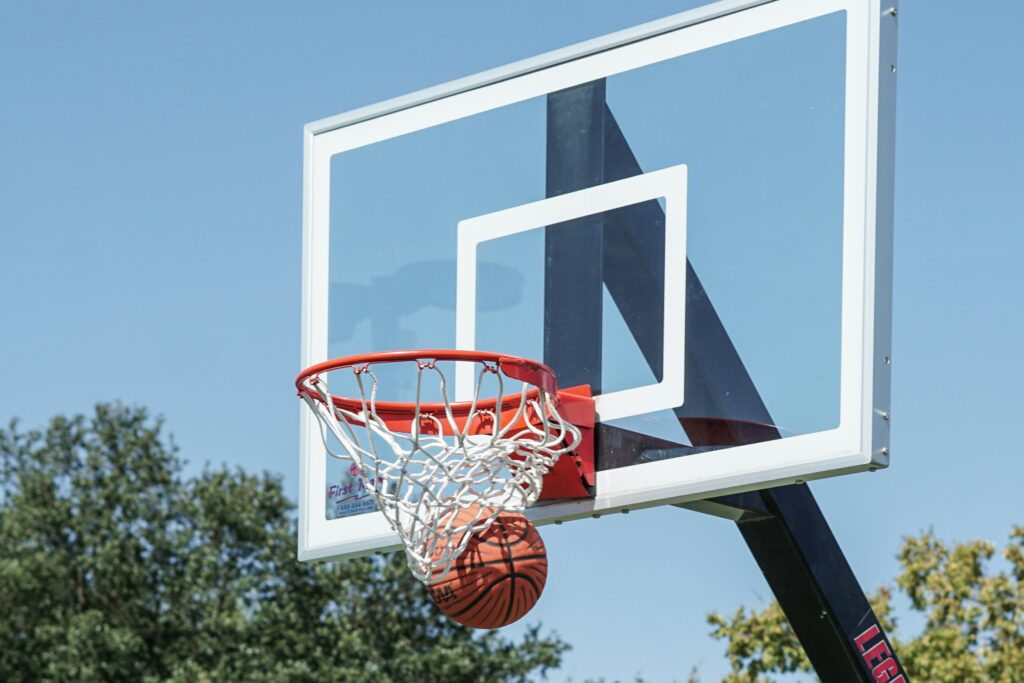
Basketball is one of the most popular competitive sports, played by children, teens and adults of both men and women at all different levels. In this sport, it’s all about speed, agility and high-impact movements. Basketball is a dynamic multidirectional sport requiring athletes to rapidly move in different directions. Athletes move horizontally and vertically requiring them to control jumping and more importantly, landing from a jump. Out of control landing can lead to serious injuries.
Causes of Injury
Basketball injuries can either be acute (occur recently) or happen as a result of overuse and repetitive motions (like those needed to practice shooting a basket). For example:
- The ankle can be injured from landing or jumping while off balance.
- Jammed fingers may occur as a result of contact with the ball.
- Knee injuries can happen as a result of sudden changes of direction or decelerating during cutting and stopping.
- A traumatic blow to the knee can injure the medial collateral ligament (MCL) or the anterior cruciate ligament (ACL).
- Bruising and cuts can occur from colliding with or striking another player.
- Stress fractures are also a common basketball injury that occurs as a result of rapid increases in the level of training.
- A rapid increase in activity level or training often leads to overtraining.
Note: An ankle injury to a child or adolescent has the potential to damage the growth plate. In the case of such an injury to these young athletes, health professionals should be consulted.
Risk Factors
In basketball, intrinsic and extrinsic risk factors are present which can lead to injury.
Intrinsic factors involve individual musculoskeletal issues, which can include skeletal immaturity (bones and joints that are still developing), unstable postural sway, muscle weakness and imbalance, poor flexibility, hypermobile ankle joint, poor proprioception, previous injury, and the sex of the athlete. Some studies also suggest intrinsic factors also include extreme body height and weight, and anatomic malalignment of the ankle and foot.
Extrinsic factors are the environment in which an athlete performs, which can include the kind of competition (duration and intensity) shoe type, taping, and playing surfaces,
Other common risk factors for basketball injuries include:
- Level of training and strength
- Playing on a court or surface that is not well maintained
- Playing with hoops that are either too high or too low
- Fatigue and overuse
- Instability and weakness
- Improper movement mechanics
- Poor posture and core strength
Prevention and Performance
The best way to avoid basketball related injuries is to be trained in proper technique and body mechanics. Additionally, proper training and conditioning so that players are prepared for the demands on the game whether playing recreationally or competitively is crucial to avoiding the occurrence of injury.
Other ways to decrease the risk of injury include:
- A pre-season physical examination by sports health professionals
- Adequate hydration, players should not wait until thirsty to drink because this is often too late for proper hydration.
- To avoid heat related illnesses avoid exercising in hot and humid conditions either in or outdoors.
- Since injury rates are higher for athletes who are not physically fit, athletes should work on physical fitness before and during the competitive season.
- After periods of inactivity the basketball player should gradually return to play and participate in aerobic, strength, flexibility, and agility training.
- Sports health professionals recommend taking at least one season off from basketball per year.
- “Listen to your body” means to decrease the amount and intensity of training if out of the typical discomfort or pain from fitness training develops.
- Proper training will not only decrease the risk of injury but also the risk of “burn-out”
Prehabilitation
Physical therapy can also help players avoid an injury in the first place with proactive prehabilitation treatment. Prehab focuses on biomechanical patterns that could predispose an athlete to injury, functional movement screening, sports-specific exercises, balance, and hands-on treatment.
An athlete’s body is always going to require maintenance to perform at a high level. Prehab is an important component in a comprehensive training regimen, especially in the offseason. Prehabilition is also very helpful if an athlete has experienced injuries in the past by reducing the likelihood of recurrence.