
Baseball
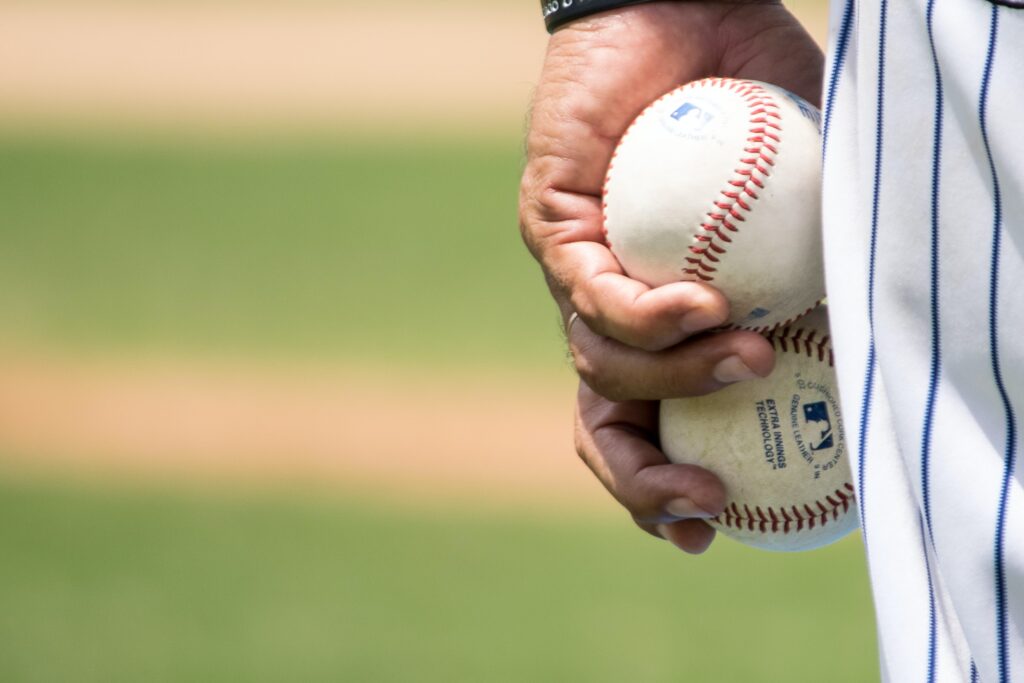
Baseball is America’s national past time. It is a game played and enjoyed by everyone from small children to adults and even professional athletes. Even though baseball is considered a safe sport, baseball players occasionally experience injuries. Baseball injuries can be acute (occur suddenly) or can develop over time due to overuse.
Baseball players are typically prone to shoulder (18%), ankle (14%) and head or face (10%) injuries. Common injuries include sprains (21%) strains (20%) contusions (16%) fractures (14%) and concussions (3%.) Due to the nature of baseball, where a relatively hard ball can be thrown at high speeds baseball players are at a high risk for soft tissue injuries including bruises, cuts and scrapes.
Acute Causes
- Being hit with the ball or a bat, resulting in soft tissue injuries
- Sliding or diving into a base
- Using improper equipment and playing techniques or mechanics
Overuse
- Throwing too much or too hard can injure the shoulder and elbow, particularly the rotator cuff, labrum and biceps
- An acute event may be triggered by repetitive stress and strain on the structures in the arm
- Throwing injuries that affect the elbow including the ulna collateral ligament and medial epicondyle
Risk Factors
There are intrinsic and extrinsic risk factors for injury. Intrinsic factors are a child’s individual musculoskeletal issues, which can include skeletal immaturity (bones and joints that are still developing) or muscle weakness. Extrinsic factors are based on the environment in which an athlete performs. This can include the various levels of competition: how much, how hard and how long play lasts.
Other common risk factors for baseball injuries include:
- For high school athletes, injuries are more likely to occur during practice than during an actual game.
- A high school pitcher is at a greater risk for injuring the shoulder (34%) rather than the elbow (19%) though both structures are susceptible to injury.
- Catchers (25%) and outfielders (25%) are also at risk for a shoulder injury.
- Only 9% of all baseball injuries require surgery to heal properly.
Prevention and Performance
It is important for players to warm up properly prior to play. Low intensity exercises like running drills and stretching can help players prepare for a game and avoid injury.
Other ways to avoid injury include:
- Pitchers are highly susceptible to shoulder injuries. Therefore, on days when they are not pitching, pitchers should avoid the positions of catcher and outfielder because these players are also prone to shoulder injuries. The best position for pitchers to play when they are not on the mound is first base, because infield positions carry less risk of shoulder injury.
- Always use proper equipment including helmets with face shields, mouth guards and eye protection particularly for pitchers, infielders and batters at the high school level.
- If a player sustains an injury, it is important to rest to avoid making the condition worse. For an athlete, rest means stopping participation in the sport for a period of time to allow the pain to subside and the player’s strength to return
- Following an injury, initiating physical therapy can help a baseball player return to their previous level of function. A physical therapist will develop a plan of care for each individual patient’s specific injuries. A combination of manual therapy and exercise can be extremely beneficial for baseball players.